Brent Crude Hits $126: US-Iran Tension Sparks Oil Price Surge
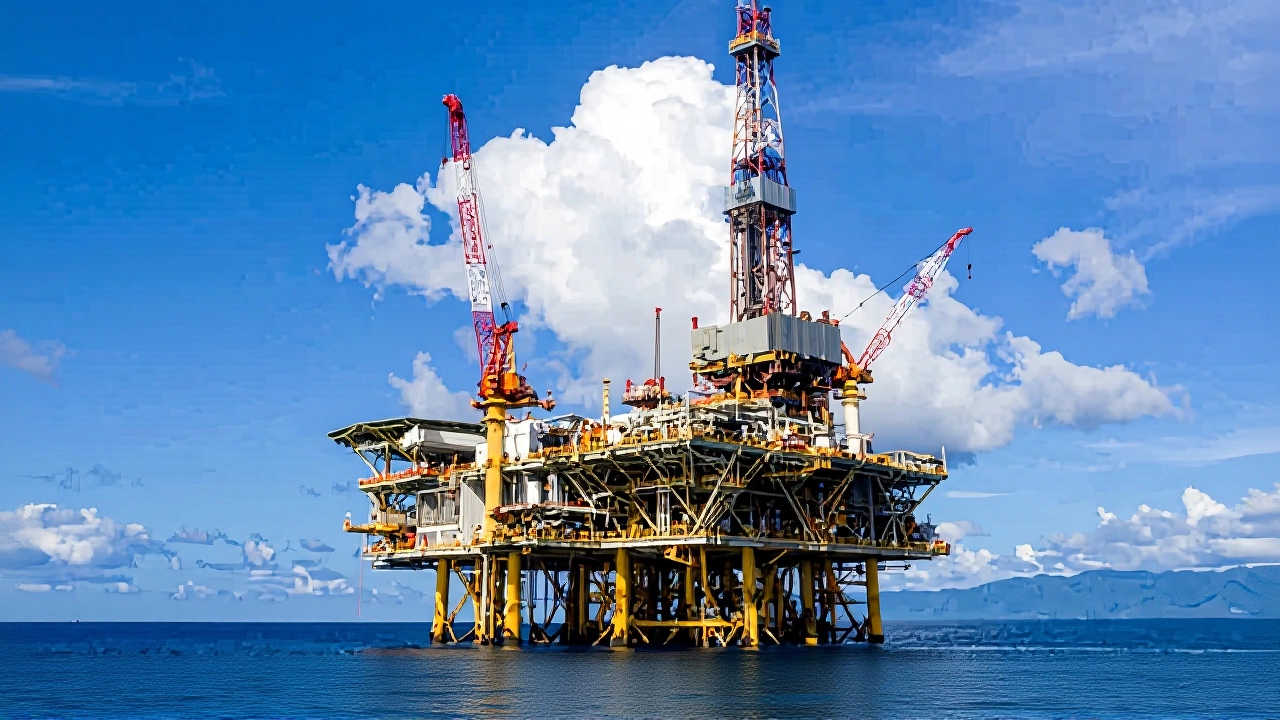
Global oil markets are in a state of panic as Brent Crude prices skyrocketed past $120 per barrel, reaching a four-year high of $126.41 for June contracts. The surge, driven by escalating geopolitical tensions between the United States and Iran, has seen crude prices jump approximately 60% in just one month. Investors are now bracing for potential impacts on global inflation and consumer wallets.
The volatility isn't just a blip; it's a structural shift triggered by specific policy announcements. On April 30, traders watched nervously as benchmarks breached psychological barriers that had held firm since early 2022. Here’s the thing: this isn't about supply shortages alone. It’s about fear. Fear of disruption at the world’s most critical oil chokepoint.
The Geopolitical Trigger
The primary catalyst for this rally is clear. Donald Trump, President of the United States, recently declared that the naval blockade on Iranian ports would remain in place until Tehran meets American demands for a nuclear deal. This statement sent shockwaves through energy trading floors worldwide.
Why does this matter? Because the Strait of Hormuz is the artery of global oil supply. Roughly 20-30% of all traded oil passes through this narrow waterway daily. When Washington signals that this route could remain restricted or face heightened military activity, traders price in risk premiums immediately. The uncertainty surrounding whether the strait will stay open or see further restrictions has created a perfect storm for price spikes.
But wait, there’s more complexity. Reports indicate that the United Arab Emirates may be signaling an intent to leave OPEC+. If true, this fractures the cartel’s ability to manage production levels collectively, adding another layer of instability to an already fragile market.
Market Numbers and Volatility
Let’s look at the hard data. In a single week, oil prices surged by 12%. Over the last month, the increase hits a staggering 60%. For context, Brent Crude futures for July settled around $111.21, up 0.73% in daily trading, while West Texas Intermediate (WTI) climbed to approximately $106 per barrel. Both benchmarks have posted gains for four consecutive months, indicating a sustained upward trend rather than a temporary spike.
The June contract hitting $126.41 is particularly significant. It marks the highest level since March 2022, shortly after Russia’s invasion of Ukraine. Yet, unlike that crisis, which was driven by outright war in Europe, this surge stems from Middle East tensions and policy-driven supply fears. Interestingly, markets are also showing extreme sensitivity to downward moves; reports note instances where prices slipped below $98 in a single day during periods of reduced tension, highlighting how volatile these assets have become.
Expert Forecasts and Long-Term Outlook
Wall Street analysts are revising their models rapidly. Goldman Sachs, a leading investment bank, raised its average Brent Crude forecast for 2026 from $77 to $85 per barrel. More urgently, they project an average price of $110 per barrel for March and April, aligning closely with current elevated levels.
This revision suggests that experts believe high prices are here to stay, at least in the near term. The "why" behind this matters: if geopolitical risks persist, structural supply constraints will keep prices elevated. However, predictions beyond 2026 remain murky. While some fear a break above $130, others argue that such highs could trigger demand destruction, forcing consumers and industries to cut back usage.

Impact on Global Economies
The ripple effects extend far beyond trading screens. For major importers like India, China, and European nations, higher crude costs mean increased transportation expenses, higher manufacturing input costs, and potentially higher retail fuel prices. Analysts warn that rising oil bills can strain household budgets and exacerbate inflationary pressures globally.
In India, for instance, where petrol and diesel prices are heavily taxed but still linked to international benchmarks, a sustained rise in Brent Crude could lead to visible increases at the pump. This affects everything from logistics costs for goods to personal commuting expenses. The phrase "breaking the common man's wallet" used in recent reports underscores the real-world economic pain point.
What Comes Next?
All eyes are now on diplomatic channels. Will Iran agree to negotiate under U.S. terms? Will OPEC+ members coordinate to stabilize output? Or will the UAE’s potential exit signal a broader fragmentation of supply management? These questions will dictate whether $126 is a peak or merely a plateau before further rises.
Investors should watch for any de-escalation signals from Washington or Tehran. A sudden easing of tensions could cause prices to drop sharply, as seen in previous volatile weeks. Conversely, any escalation in military posturing near the Strait of Hormuz could push prices toward the feared $130 mark. The next few weeks will be critical in determining the trajectory of global energy costs.
Frequently Asked Questions
Why did oil prices surge so dramatically in one month?
The surge was primarily driven by geopolitical tensions between the US and Iran, specifically regarding the naval blockade on Iranian ports and the Strait of Hormuz. Additionally, uncertainty around OPEC+ stability, with hints of the UAE leaving the group, contributed to supply fears, causing a 60% price increase in a short period.
How does the Strait of Hormuz affect global oil prices?
The Strait of Hormuz is a critical chokepoint through which roughly 20-30% of global oil trade passes. Any threat to its openness, such as a naval blockade or military conflict, creates immediate supply risk premiums, driving up prices as traders anticipate potential disruptions in flow.
What is Goldman Sachs' prediction for future oil prices?
Goldman Sachs has revised its forecast, predicting an average Brent Crude price of $110 per barrel for March-April and raising its 2026 average estimate from $77 to $85 per barrel. This reflects expectations of sustained higher prices due to ongoing geopolitical risks and supply constraints.
Will oil prices reach $130 per barrel?
While analysts are monitoring the possibility, it depends largely on geopolitical developments. If tensions between the US and Iran escalate further or if the Strait of Hormuz faces prolonged restriction, prices could breach $130. However, such high levels might also trigger demand reduction, potentially capping further gains.
How will this impact consumers in oil-importing countries?
Consumers in major importing nations like India and China may face higher fuel costs at the pump, increased transportation fees, and broader inflationary pressures. Higher input costs for businesses can lead to price hikes on everyday goods, effectively reducing purchasing power for households.